
Imagine a workspace that feels like stepping into a fairytale cottage—soft florals, vintage treasures, handwritten letters, pressed flowers, and the gentle presence of nature throughout. This is cottagecore, the aesthetic movement that romanticizes simple, rural life and brings that pastoral charm into modern living.
Cottagecore isn’t just about pretty decorations. It’s a lifestyle philosophy that values slow living, handcrafted items, connection to nature, and finding beauty in simple, everyday moments. When applied to desk setups, cottagecore creates workspaces that feel less like productivity machines and more like creative sanctuaries where you might write poetry, sketch wildflowers, or work on projects that genuinely matter to you.
In this comprehensive guide, I’ll show you how to transform your desk into a cottagecore haven that combines vintage charm with functional workspace needs—whether you’re working from home, studying, crafting, or pursuing creative hobbies.
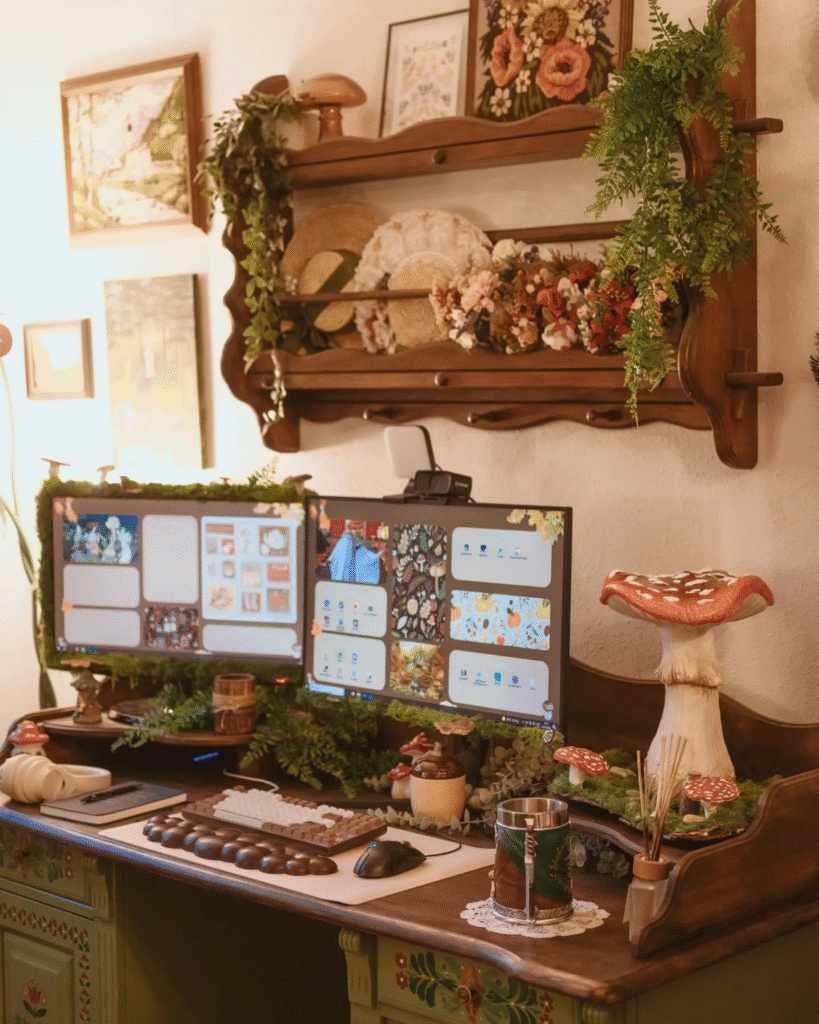
Understanding Cottagecore Aesthetics
Cottagecore emerged as a counter-movement to fast-paced modern life, celebrating rural simplicity, traditional crafts, and harmony with nature. Think Anne of Green Gables, The Secret Garden, English countryside cottages, and the pastoral romanticism of the Victorian era.
Core Cottagecore Values:
Slow Living: Rejecting hustle culture for intentional, mindful work. Your desk setup should encourage lingering over tasks, savoring creative processes, and working at a human pace.
Connection to Nature: Bringing the outdoors inside through dried flowers, pressed botanicals, natural materials, and lots of living plants. Nature isn’t decoration—it’s integral.
Handmade and Vintage: Valuing items with history, character, and craftsmanship over mass-produced perfection. Thrifted treasures, handmade items, and family heirlooms belong here.
Feminine Softness: While not exclusively feminine, cottagecore embraces soft textures, floral patterns, pastel colors, and gentle aesthetics often coded as traditionally feminine.
Romanticism: Finding magic in ordinary moments. A cup of tea becomes ritual. Letter writing becomes art. Your workspace should inspire rather than just function.
Self-Sufficiency: The DIY spirit—making things yourself, mending rather than replacing, creating beauty from what you have.
The Cottagecore Color Palette
Cottagecore colors are soft, muted, and inspired by nature—never harsh or synthetic-looking.
Primary Colors:
Warm Neutrals:
- Cream and ivory
- Warm beige and mushroom
- Soft taupe
- Natural linen tones
- Antique white
Floral Pastels:
- Dusty rose and blush pink
- Soft lavender and lilac
- Sage green and mint
- Butter yellow
- Powder blue
Earth Tones:
- Terracotta and clay
- Moss and forest green
- Wheat and honey
- Rust and copper
- Bark brown
Accent Colors:
- Deep burgundy or wine (vintage books, dried roses)
- Forest green (plants, vintage accessories)
- Soft gold (vintage frames, details)
What to Avoid:
- Bright, neon, or saturated colors
- Cool, modern grays
- Stark white
- Black (use sparingly, only in vintage items)
- Anything that feels synthetic or artificial
The palette should feel like walking through an English garden or exploring a vintage attic—faded, soft, full of gentle color that’s been kissed by time.
[AFFILIATE PLACEHOLDER: Cottagecore desk accessories in soft pastels – Search for “Vintage Style Desk Accessories Floral Pink” on Amazon]
Finding Your Cottagecore Desk
The desk itself should feel like it has history and character, even if it’s actually new.
Ideal Cottagecore Desk Styles:
Vintage Writing Desk: Small, feminine writing desks from the 1920s-1960s with curved legs, delicate details, and maybe a drawer or two. These were designed for letter writing and creative work—perfect for the cottagecore aesthetic.
Repurposed Furniture: An old farmhouse table, a refinished vanity, or a converted sewing table. The patina and history are assets, not flaws. Mismatched charm beats uniform perfection.
Painted Wood Desk: Desks in soft pastels (sage green, dusty pink, cream) or distressed white. The cottage aesthetic loves painted furniture with visible wear showing wood underneath.
French Country Desk: Desks with cabriole legs, scalloped edges, or provincial styling. Look for terms like “French country,” “shabby chic,” or “farmhouse” when shopping.
Window Table Desk: A simple table positioned at a window with a garden view. The window becomes part of your workspace, bringing outdoor beauty inside.
[AFFILIATE PLACEHOLDER: Vintage-style writing desk – Search for “White Distressed Writing Desk Shabby Chic” on Amazon]
DIY Cottagecore Desk Transformations:
Paint and Distress: Take a plain wooden desk and paint it soft sage, cream, or blush. Sand edges gently to reveal wood underneath, creating authentic-looking wear. Seal with matte finish.
Decoupage Details: Add vintage botanical prints, floral patterns, or book pages to drawer fronts or desktop edges using decoupage medium. This adds personal, handmade charm.
Drawer Liner Magic: Line drawers with vintage-style floral paper or fabric. Every time you open a drawer, you get a cottagecore moment.
Hardware Upgrade: Replace modern drawer pulls with vintage glass knobs, ceramic handles with floral patterns, or antique brass pulls from flea markets.
Seating: Comfort Meets Charm
Cottagecore chairs should feel cozy and collected rather than matching or modern.
Chair Options:
Vintage Wooden Chairs: Ladder-back chairs, Windsor chairs, or simple farmhouse chairs in natural wood or painted finishes. Add a cushion for comfort.
Upholstered Vanity Chairs: Small upholstered chairs in floral fabric, pink velvet, or cream linen. These feel feminine and romantic while providing cushioned comfort.
Wicker or Rattan Chairs: Natural wicker with cushions creates that garden cottage feeling. Layer with throw pillows in floral or gingham patterns.
Recovered Office Chair: If you need ergonomic support, recover a modern office chair in cottagecore fabric—floral linen, gingham, or soft velvet in appropriate colors.
Floor Cushions: For low desks or occasional seating, large floor cushions in floral patterns or soft pastels create flexible, cozy seating.
Cushion and Throw Essentials: Layer your chair with:
- Floral or gingham cushions
- Crocheted or knit throws
- Vintage embroidered pillows
- Ruffled cushion edges
- Mix patterns gently (florals with checks, not florals with florals)
[IMAGE PLACEHOLDER: Various cottagecore chair styling options with cushions and throws]
Dried and Fresh Flowers: The Cottagecore Essential
No cottagecore desk is complete without abundant florals—dried, pressed, fresh, or all three.
Dried Flower Arrangements:
Best Flowers for Drying:
- Lavender (hangs in bunches)
- Roses (dry in full bloom or as buds)
- Eucalyptus (silvery leaves, lovely scent)
- Baby’s breath (classic, delicate)
- Wheat stalks and grasses
- Statice and strawflowers
- Hydrangeas (large, impressive)
Display Methods:
- Glass bottles and vintage vases
- Hanging upside down from wall hooks or ceiling
- Pressed in frames as art
- Laid across open books
- Tucked into desk organizers
- Woven into wreaths or garlands
[AFFILIATE PLACEHOLDER: Dried flower bouquet – Search for “Dried Lavender Eucalyptus Bouquet Natural” on Amazon]
Pressed Flowers:
Press flowers between heavy books, then display:
- In simple frames on walls
- Between glass panes as window decoration
- In clear phone cases or desk accessories
- Laminated as bookmarks
- Glued to journals or stationery
Fresh Flowers:
Keep small fresh bouquets in vintage vases or teacups. Change weekly. Favorites include:
- Garden roses
- Wildflowers (daisies, buttercups, clover)
- Herbs (rosemary, mint, thyme)
- Seasonal blooms from farmer’s markets
Foraging for Free:
Collect from your yard or nature walks (where permitted):
- Wildflowers and grasses
- Interesting branches with leaves
- Moss and lichen on fallen branches
- Pine cones and seed pods
- Pretty leaves in fall
Vintage and Antique Elements
Cottagecore celebrates items with history and patina—the opposite of buying everything new and matching.
Where to Find Cottagecore Treasures:
Estate Sales: The absolute best source. Look for:
- Vintage teacups and saucers
- Old books with cloth covers
- Brass candlesticks
- Ceramic figurines
- Embroidered linens
- Glass bottles and jars
- Vintage stationery and ephemera
Thrift Stores: Check weekly for rotating inventory:
- Picture frames (repaint if needed)
- Ceramic planters
- Woven baskets
- Vintage journals
- Old photographs and postcards
Antique Stores: More curated and expensive, but for special pieces:
- Victorian writing accessories
- Antique inkwells
- Vintage botanical prints
- Old maps and documents
Family Attics: Ask family members for items they’re ready to part with:
- Grandmother’s teacups
- Old family photographs
- Vintage linens and doilies
- Handwritten letters or journals
Online Sources:
- Etsy (vintage sections)
- eBay (search “vintage cottage”)
- Facebook Marketplace
- Estate sale websites
Key Vintage Items for Cottagecore Desks:
Vintage Books: Cloth-covered books with pretty spines become decoration and function. Stack horizontally as platforms for plants or small items. Display vertically with decorative bookends.
Teacups and Saucers: Use as pen holders, small planters, or just display. Mismatched floral patterns are perfect—they don’t need to match.
Glass Bottles and Jars: Old medicine bottles, milk bottles, mason jars, and apothecary jars hold flowers, pens, or just look lovely on shelves.
Vintage Frames: Ornate gold frames, simple wood frames, or distressed white frames hold botanical prints, pressed flowers, or vintage photographs.
Lace and Doilies: Vintage lace runners, crocheted doilies, or embroidered linens add delicate texture under plants, lamps, or decorative items.
[AFFILIATE PLACEHOLDER: Vintage-style picture frames set – Search for “Vintage Gold Picture Frame Set Ornate” on Amazon]
Cottagecore Desk Accessories
Every functional item becomes an opportunity for beauty and charm.
Writing Supplies:
Stationery:
- Floral-patterned notecards
- Vintage-style writing paper
- Wax seals and sealing wax
- Fountain pens or dip pens with ink
- Pencils in pretty holders
Journals and Notebooks:
- Leather-bound journals
- Fabric-covered notebooks
- Journals with pressed flower designs
- Handmade paper notebooks
- Recipe card boxes for notes
Organization:
Natural Materials:
- Woven baskets for storage
- Wooden boxes with floral painting
- Ceramic crocks for pens
- Vintage tins for paper clips
- Glass jars for small supplies
Fabric Elements:
- Fabric-covered storage boxes
- Gingham or floral organizers
- Vintage-style desk pad or blotter
- Embroidered pen rolls
Functional Beauty:
Lamp Options:
- Vintage table lamps with floral shades
- Lamps with ceramic bases (look for florals or nature themes)
- Warm Edison bulbs in simple fixtures
- Candlesticks (real candles for ambiance, electric for task lighting)
Clock:
- Vintage alarm clocks
- Mantel clocks
- Wall clocks with botanical faces
- Nothing digital—analog only
Magnifying Glass: A vintage magnifying glass with brass or wood handle adds Victorian charm while being genuinely useful for detailed work.
Letter Holder: Brass or vintage wood letter holders keep mail and papers organized while looking like they belong in a country manor.
Plants: Growing Your Indoor Garden
Cottagecore embraces abundant greenery and the feeling of bringing the garden indoors.
Cottagecore Plant Choices:
Trailing Plants:
- Pothos (especially in vintage teacups)
- String of pearls
- Ivy (English ivy especially)
- Spider plants
Herbs:
- Rosemary (smells wonderful)
- Basil (useful and pretty)
- Mint (in contained pots)
- Thyme (delicate appearance)
- Lavender (if you have bright light)
Cottage Garden Flowers:
- African violets
- Primrose
- Small roses (miniature varieties)
- Cyclamen (seasonal)
Ferns:
- Maidenhair fern (delicate, Victorian)
- Boston fern (lush, full)
- Bird’s nest fern (architectural but soft)
Classic Houseplants:
- Peace lily (white flowers)
- Begonias (varied foliage)
- Geraniums (classic cottage flower)
[AFFILIATE PLACEHOLDER: Cottage-style ceramic planters – Search for “Floral Ceramic Planter Set Vintage Style” on Amazon]
Planter Styles:
Vintage Options:
- Chipped or crazed ceramic pots (character, not flaws)
- Teacups and teapots with drainage holes drilled
- Old enamelware (cream with floral patterns)
- Terracotta with aged patina
- Vintage watering cans as planters
Color Choices:
- Soft pastels (pink, lavender, mint)
- Cream and ivory
- Floral patterns
- Hand-painted details
- Natural terracotta
Creating Cottagecore Vignettes
Cottagecore styling is about creating small, collected arrangements that tell stories.
The Art of Vignettes:
Group items in odd numbers (3, 5, 7) with varying heights:
- Stack books, top with small vase of flowers, lean vintage postcard against books
- Group three vintage bottles of different heights with single stems in each
- Arrange teacup planter, small stack of books, vintage frame
Layering:
- Back layer: Art or mirror on wall
- Middle layer: Medium items (lamps, plants, stacked books)
- Front layer: Small items (teacup, small vase, decorative box)
Theme Collections:
- All botanical: Pressed flowers, plant books, vintage botanical prints
- Tea corner: Teapot, cups, vintage tea tins, small vase of flowers
- Writing station: Vintage pen holder, inkwell, stack of letters, wax seal
Textiles and Soft Elements
Cottagecore loves layers of soft, touchable fabrics that add warmth and comfort.
Textile Elements:
Desk Surface:
- Vintage lace runner
- Embroidered linen cloth
- Gingham or floral fabric as desk pad
- Crocheted doily under lamp or plants
Wall Textiles:
- Vintage embroidered samplers
- Lace curtains at window
- Fabric wall hangings
- Quilts or tapestries as wall art
Soft Touches:
- Velvet ribbon bookmarks
- Fabric-bound books
- Embroidered pin cushions
- Small stuffed animals or dolls (vintage-style)
Patterns to Mix:
- Florals (the foundation)
- Gingham and checks
- Small dots
- Toile patterns
- Vintage wallpaper patterns
Mixing Pattern Rules: Keep to 2-3 patterns maximum, ensure they share color palette, vary scale (large floral with small check, not two large florals).
[IMAGE PLACEHOLDER: Cottagecore desk showing textile layering and pattern mixing]
Lighting: Soft and Warm
Cottagecore lighting should feel like candlelight or golden hour—never harsh or cool.
Natural Light: Position desk near windows. Use sheer lace or embroidered curtains to filter light softly. Avoid heavy drapes that block natural light.
Task Lighting:
- Vintage-style table lamps with fabric shades
- Lamps with floral ceramic bases
- Warm LED bulbs (2700K) mimicking candlelight
- Adjustable lamps with brass or painted finishes
Ambient Lighting:
- Real candles in vintage holders (safely, never unattended)
- String lights with warm bulbs along shelves
- Lanterns with LED candles
- Salt lamps (natural, warm glow)
Fairy Lights: Warm white fairy lights (not multicolor) draped on walls, around mirrors, or along shelves add magical, whimsical light perfect for cottagecore.
DIY Cottagecore Projects
Cottagecore celebrates handmade items—creating things yourself is core to the aesthetic.
Easy DIY Projects:
Pressed Flower Art: Press flowers for 2-3 weeks, arrange on cardstock or in frame, display. Cost: Free to $5 for frame.
Painted Vintage Frames: Buy thrift store frames, paint soft pastels, distress gently, add botanical prints. Cost: $2-5 per frame.
Fabric-Covered Boxes: Cover cardboard boxes with vintage fabric using mod podge. Cost: $3-8 per box.
Dried Flower Bundles: Hang flowers upside down to dry, tie with ribbon or twine, hang on wall. Cost: Free if foraged.
Book Page Crafts: Use pages from damaged vintage books to create envelopes, bookmarks, or decoupage projects. Cost: Free from damaged books.
Embroidered Samplers: Simple cross-stitch or embroidery with cottagecore motifs (flowers, bees, mushrooms). Cost: $10-15 for supplies.
Teacup Candles: Melt wax into vintage teacups with wicks. Cost: $8-12 for supplies, makes multiple candles.
Digital Integration: Hiding Modern Technology
Modern technology disrupts cottagecore aesthetics, but you likely need computers and phones for work.
Strategies to Hide Tech:
Monitor Disguise:
- Position monitor against wall decorated with botanical prints
- Frame monitor with plants on either side
- Use wireless keyboard and mouse to reduce cables
- Choose monitor in white or soft color if possible
Cable Management:
- Route all cables behind or under desk
- Use fabric cable sleeves in natural colors
- Hide power strips in woven baskets
- Wireless everything when possible
Phone and Tablet:
- Cases in floral, leather, or cottagecore patterns
- Store in drawers when not in use
- Charging station hidden in decorative box
Laptop:
- Close when using external monitor
- Skin or case in appropriate aesthetic
- Store in vintage bag or basket when not in use
Printer: If needed, hide in a cabinet or cupboard nearby—nothing ruins cottagecore faster than a black plastic printer.
Seasonal Cottagecore Adjustments
Cottagecore naturally shifts with seasons, connecting you to nature’s cycles.
Spring:
- Fresh flowers everywhere
- Pastel colors emphasized
- Lighter fabrics (linen, cotton)
- Bird’s nests and eggs as décor
- Seed packets and garden planning
Summer:
- Abundant wildflowers
- Herbs growing on desk
- Bright (but still soft) colors
- Fresh fruit as decoration
- Open windows with breeze
Fall:
- Dried flowers and grasses
- Warm colors (rust, burgundy, gold)
- Pumpkins and gourds
- Preserved leaves
- Cozy throws and warmer textiles
Winter:
- Evergreen branches
- Dried oranges and cinnamon
- More candles for warmth
- Heavier fabrics (velvet, wool)
- Fewer fresh flowers, more preserved
The Cottagecore Lifestyle at Your Desk
Cottagecore is more than aesthetics—it’s how you work and live at your desk.
Cottagecore Work Practices:
Letter Writing: Schedule time for handwritten letters to friends and family. Use quality stationery, fountain pen, wax seals.
Tea Ritual: Brew loose leaf tea in a proper teapot. Use vintage cups. Take real breaks to savor tea.
Journaling: Keep a nature journal, gratitude journal, or creative writing journal. Write by hand, not digitally.
Nature Study: Sketch plants or flowers at your desk. Press and identify flowers. Keep nature observation notes.
Slow Mornings: Begin workday with tea, journaling, and a few moments looking at your plants or out your window.
Creative Hobbies: Use your desk for watercolor, embroidery, poetry writing, recipe collecting—creative pursuits valued by cottagecore.
Maintenance and Care
Daily:
- Deadhead or remove wilted flowers
- Return items to their vignettes
- Wipe desk with soft cloth
- Light a candle or incense for ambiance
Weekly:
- Change water in fresh flower vases
- Water plants appropriately
- Dust vintage items gently
- Rearrange vignettes slightly for freshness
Monthly:
- Deep clean all surfaces
- Rotate dried flowers (refresh when too dusty)
- Polish brass or silver items
- Wash textile elements
Seasonally:
- Switch out seasonal décor
- Update fresh flowers for season
- Adjust textiles for temperature
- Refresh dried flower arrangements
Common Cottagecore Mistakes to Avoid
Too Cluttered: Even cottagecore has limits. Too many items becomes chaos, not charm. Curate carefully.
Wrong Color Palette: Bright, saturated colors or cool grays break the spell. Stick to soft, muted, warm tones.
All New Items: Buying everything new and “cottagecore-styled” misses the point. Mix vintage finds with intentional new purchases.
Ignoring Function: Your desk must work for actual productivity. Beauty shouldn’t completely sacrifice function.
Fake Plants: Cottagecore celebrates real nature. Fake plants feel wrong in this aesthetic—use dried or real only.
Too Themed: Cottagecore should feel collected over time, not decorated in one shopping trip. Build slowly.
Conclusion: Cultivating Your Cottage Sanctuary
Creating a cottagecore desk setup is about more than achieving a particular look—it’s about crafting a space that connects you to simpler pleasures, slower rhythms, and the beauty of natural and handmade things.
Your cottagecore desk should feel like a retreat, a creative sanctuary where the modern world’s demands soften into something more manageable and meaningful. It’s permission to embrace feminine softness, to value beauty alongside productivity, to work at a human pace in a space that feels almost magical.
Start with what you have. Thrift a vintage teacup. Dry some flowers. Paint an old frame. Add a plant. Cottagecore spaces grow and evolve organically, just like the gardens that inspire them.